

Choosing the Right Surf Wax
Choosing the right surf wax can make all the difference in your surfing experience. The wrong wax can leave you slipping off your board, while the right one provides the perfect grip and confidence to catch waves. Let's break down everything you need to know about selecting the perfect surf wax for your needs.
Temperature-Based Selection Guide
The most critical factor in choosing surf wax is the water temperature where you'll be surfing. Here's what you need for different conditions:
Tropical Waters (75°F/24°C+)
- Use harder, more resistant wax
- Designed to prevent melting in hot conditions
- Perfect for Hawaii, Australia, and other tropical locations
- Recommended brands: Sticky Bumps Hawaiian Wax, Mrs. Palmers Tropical Wax
Warm Waters (58-75°F/14-24°C)
- Balanced formula for moderate temperatures
- Most versatile option for general surfing
- Works well in most coastal areas
- Recommended brands: Zog's Original Sexwax, Fu Wax
Cool Waters (58-68°F/14-20°C)
- Slightly softer compound for better grip in cooler conditions
- Ideal for spring/fall surfing in temperate zones
- Provides extra traction when needed
- Recommended brands: Double Barrel Surf Wax, Bubble Gum Wax
Cold Waters (Below 60°F/15°C)
- Softest, grippiest formula
- Essential for cold water surfing
- Must be stored carefully to prevent melting
- Recommended brands: Famous Green Label Cool Organic Wax
Types of Wax and Their Uses
Basecoat vs Topcoat
Every surfboard needs two layers of wax:
- Basecoat: First layer applied directly to the board, creates the foundation for traction, generally harder than topcoat, forms small bumps for grip.
- Topcoat: Applied over the basecoat, provides the final gripping surface, should be applied in circular motions, makes bumps more pronounced.
Traditional vs Sticky Wax
Traditional Wax: Most common type, takes time to develop full grip.
Sticky Wax: For extra traction, use sparingly on specific areas. Don't overapply sticky wax - it can make the board too sticky to ride.
How to Apply Your Wax
Preparation
- Clean your board thoroughly.
- Remove old wax if present.
- Ensure surface is dry.
Application Steps
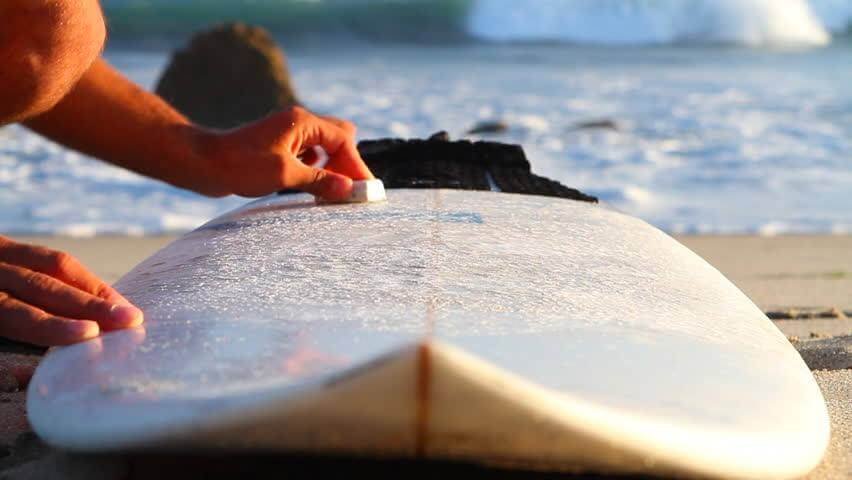
- Start with basecoat, applying in diagonal patterns.
- Create crosshatch pattern for maximum grip.
- Add topcoat in circular motions.
- Don't oversaturate the board.
Maintenance Tips
When to Reapply
- Check traction regularly.
- Reapply when grip starts to fade.
- Don't need to reapply for every session; frequency depends on usage.
Wax Removal
- Use a wax comb for routine maintenance.
- For complete removal, use sand or heat gun.
- Clean thoroughly before reapplying; remove all residue for best results.
Final Tips
- Experiment with Different Types: Try various brands and formulas to find what works best for your surfing style.
- Quality Matters: Invest in reputable brands; don't compromise on quality for price. Better wax means better performance.
